Privacy is harder to prove than speed. In August 2026, XuanFeng published its privacy practice whitepaper, turning "what is collected, how it is used, when it is deleted" into a checkable document.
The whitepaper classifies user data into three categories—account, connection and diagnostic—each with purpose, necessity and retention location.
| Data Type | Purpose | Location | Necessary |
|---|---|---|---|
| Account | Login & payment | Encrypted | Yes |
| Connection | Not collected | Local only | No |
| Diagnostic | Troubleshooting | Anonymized | Optional |
Minimal collection is the principle—anonymize when possible, keep local when possible, don't collect when possible. Connection data is explicitly "not collected", a key difference from some rivals.
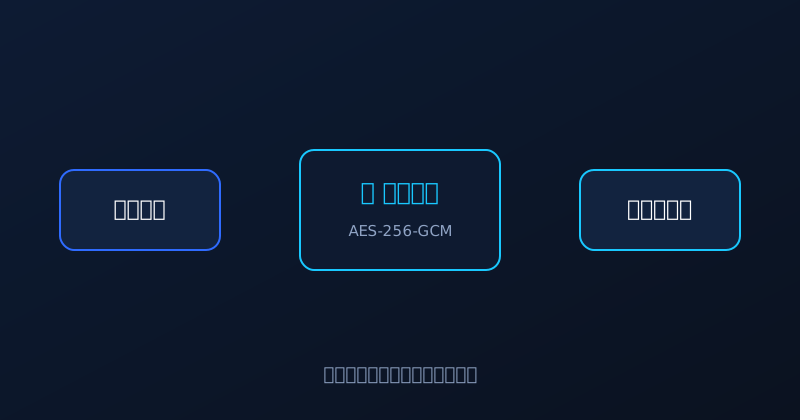
Storage and deletion matter as much as collection. Account data is encrypted with least-privilege access; diagnostic data is off by default and auto-anonymized after 30 days; account deletion wipes associated data within 90 days.
| Stage | Measure | Timeline |
|---|---|---|
| Storage | Encrypted + least privilege | Ongoing |
| Diagnostic | Auto anonymize | 30 days |
| Account deletion | Full deletion | 90 days |
For users, the whitepaper is a checklist to verify actual behavior. Choosing an accelerator should rely less on "secure" ads and more on whether it publishes data handling mechanisms.
"After reading the whitepaper I understood the data classification—a product that dares to publish details feels safer." — A privacy-sensitive user
Privacy has no end point. XuanFeng says the whitepaper will iterate and accept ongoing scrutiny.
← Back to News
Comments
Detailed data classification beats vague privacy policies.
Not collecting connection data was my key reason to choose XuanFeng.
Hope the whitepaper updates regularly for transparency.